
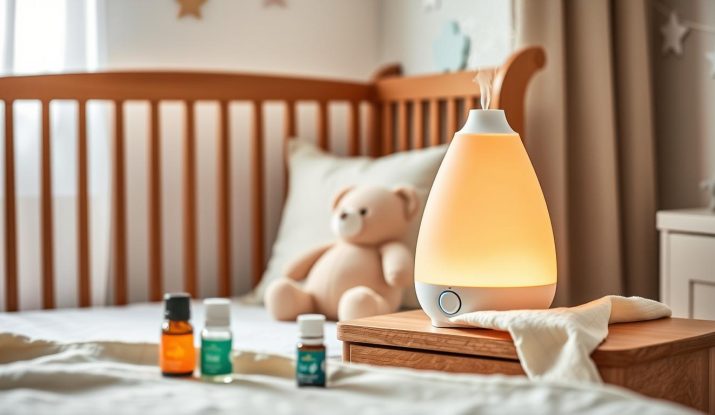
We aim to help Singapore parents choose a safe unit for nursery comfort without confusion. This short guide explains why people search for a combined mist and scent device in air‑conditioned homes and what really matters when you shop.
We start by clarifying the difference between a humidifier and a diffuser, and why many two‑in‑one claims can be misleading. Our focus is safety: cool‑mist operation, auto shut‑off, easy cleaning and low noise.
We recommend water‑only misting for most infants and consult a clinician before adding any essential oils. We note which oils parents often ask about and which to avoid. Premature or medically complex children need extra caution.
Read on to see age guidance, safe scent options, use tips and how to compare specs. For practical buying notes and tested picks, see this best nursery humidifiers guide.
Why we’d use a humidifier with essential oils in a baby’s room
We aim to balance practical comfort with cautious scenting in Singapore homes that run air‑conditioning most of the day.
Dry indoor air can make nasal passages feel sore and disrupt sleep. Raising moisture to a comfortable level may ease that dryness and help infants rest better.
Aromatherapy is simply the use of plant-derived aromas to shape how a room feels. These concentrated extracts can support a calmer wind‑down routine and reduce reliance on strong synthetic fragrances.
We treat oils with care because their potency can cause reactions. Scents can aid relaxation and routine, but they are complementary products, not cures for illness or chronic conditions.
- Keep scent levels light and sessions short.
- Prefer flame‑free diffusion and regular ventilation.
- Avoid masking poor air quality with more fragrance.
Baby safety first: age guidance and when to avoid essential oils
Our priority is to protect developing lungs and nervous systems when considering any scented mist in a nursery.
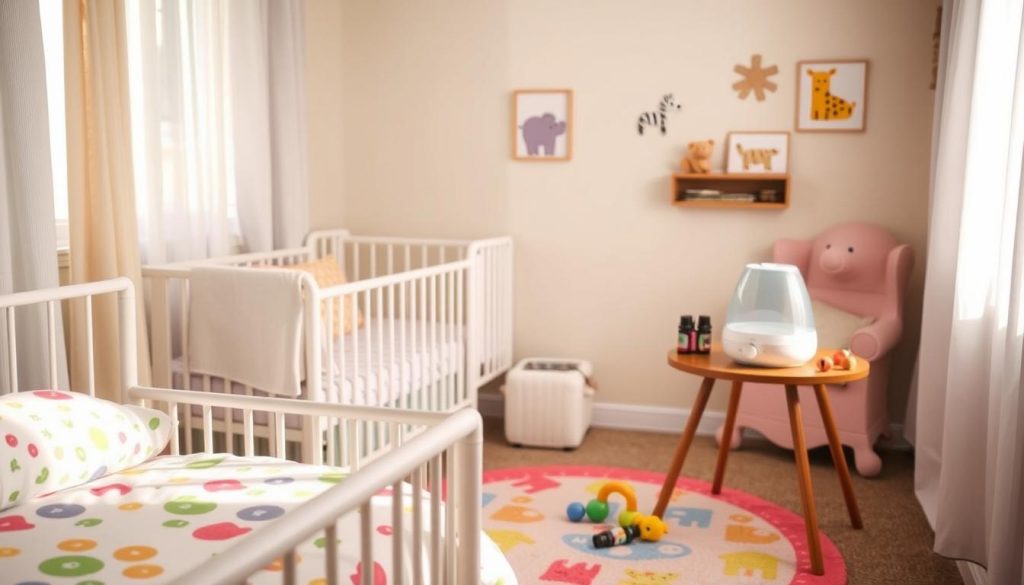
Newborns to 3 months
We recommend water-only misting. Newborn respiratory and central systems are still maturing and can be sensitive to strong fragrances.
Use a clean ultrasonic unit, short runs and place it well out of reach. Keep ventilation available and stop if you notice any change in breathing.
From 3 months onwards
When we introduce scent, we add one new option at a time at very low intensity. Run short sessions and watch for any irritation or unusual reaction.
Look for changes in breathing, sleep, mood or skin. If any sign appears, stop use and air the room.
Why some guidance says 6 months
Some clinicians advise waiting until 6 months as a conservative choice. This is sensible for families with allergies, eczema, wheeze or sensitive skin.
Medical conditions and medications
We always check with a doctor first if there is asthma, epilepsy, heart disease, diabetes, recent surgery or ongoing medication. Safety depends on the whole household health picture.
- Remember: babies and children are not small adults — dose and duration must change.
- Stop immediately and ventilate if coughing, laboured breathing, rash, watery eyes, agitation or lethargy occur.
- When in doubt, consult a clinician about safe use and household risks.
Essential oil humidifier for baby: what to look for when buying
We prioritise units that combine gentle misting with clear safety controls and straightforward upkeep. Look first at flame-free, ultrasonic, water-based designs. These spread scent without heat and reduce fire risk.
Timed cycles and automatic shut-off
Intermittent settings (for example 30–60 minutes on, 30–60 minutes off) limit exposure and help build a conservative routine around naps and bedtime. Reliable auto shut-off prevents runs when the tank is empty.
Placement, ventilation and spill protection
Keep the unit out of reach and on a stable surface. Avoid pointing mist directly at the cot and maintain good ventilation even with air conditioning.
Tank, run time, noise and materials
Choose a tank that lasts a sleep cycle and a quiet model for light sleepers. Prefer neutral, well-finished plastics and avoid units that smell of strong synthetic fragrances or premixed blends with alcohol.
Cleaning and mould control
Regular care matters: easy-to-open tanks and clear cleaning instructions reduce mould risk. Treat the device as a water system and follow manufacturer guidance.
Quick checklist: water-only compatibility, intermittent programme, auto shut-off, stable base, simple cleaning and clear safe use instructions. For tested picks, see our recommended buyer resource humidifier guide.
Essential oils safe to use around babies and which to avoid
A cautious, low-dose approach is our starting point when selecting scents to use around little ones. Safety depends on age, dose, duration and the individual child, so we favour the gentlest route.
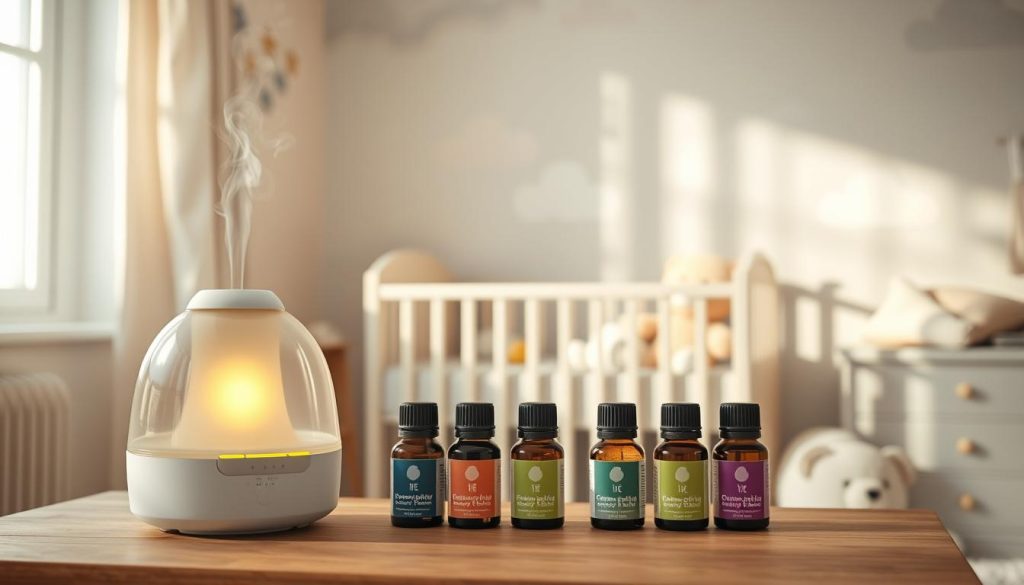
Gentler options often recommended
Lavender, chamomile and dill are commonly cited as milder choices. Families use them sparingly to support calm routines and short naps.
Good “starter” scent families
Citrus and light florals are usually better tolerated. Use tiny amounts and brief diffusion to test any new scent and watch for symptoms such as coughing or irritability.
Oils we’d save for later
- Peppermint (menthol) — cooling effect that can be too strong.
- Eucalyptus (1,8‑cineole) — may cause laboured breathing in young children.
- Rosemary — can affect blood pressure in sensitive individuals.
- Birch/wintergreen (methyl salicylate) — potent and risky if misused.
Label‑reading checklist
Look for pure, authentic and unadulterated products on the label. Avoid premixed blends containing alcohol or synthetic fragrances. Remember: more drops do not equal greater benefit.
Safety note: we do not recommend adding any scented product to a bath due to ingestion risk. Store all bottles securely and out of reach.
How we recommend using essential oils with a humidifier or diffuser
We advise a cautious, stepwise approach when you use essential oils in a nursery or living room. Start with the smallest dose, run the unit for one hour and watch closely for any sign of irritation or unusual reaction.
Start low, go slow
Practical method: add a minimal amount to your diffuser or vapour unit, run it for one hour while someone is present, then stop and assess. Try only one scent at a time and do not stack sprays, scented laundry products or plug‑ins in the same room.
Safe diffusion routines
Prefer timed intervals such as 30–60 minutes on, then 30–60 minutes off. Open a window briefly between sessions to refresh the air. Stop scenting well before deep sleep so the room is not continuously scented all night.
Non‑negotiables and room tips
- Never allow ingestion of any product. We do not add oils to a bath because that raises the risk of swallowing and skin exposure.
- Keep the unit away from the cot and soft furnishings to avoid damp and mould from excess water.
- If a reaction occurs, stop immediately, ventilate, wash any contacted skin with gentle soap and water and seek medical help if breathing is affected.
For guidance on combining mist and scent safely in Singapore flats, see our summary on are humidifiers good for babies.
If you’re also applying oils topically: dilution, carrier oils and patch testing
Before we apply any scented blend to skin, we confirm the infant is at least three months old and that a clinician has no objection. Topical absorption is higher in young children, so dose and vigilance must change.
Safe dilution: how much to use
We follow NAHA guidance: for infants older than three months use a 0.5–1% dilution. That compares with typical adult dilutions of 2.5–10%.
Never apply any undiluted concentrate directly to skin. Even small amounts can enter the bloodstream quickly after topical use.
Choosing a carrier and checking allergens
The right carrier reduces irritation and spreads the blend evenly. Common choices include plain vegetable oil, coconut and sweet almond.
We always check labels for peanut-derived ingredients and other allergens. If a family has nut sensitivities, avoid nut-based carriers and choose a neutral vegetable alternative.
How to do a 24-hour patch test
Apply a tiny drop of the diluted mix to the inner forearm or upper leg. Keep the area dry and observe for 24 hours.
- Stop use immediately if there is redness, swelling, rash, pain or worsening dryness.
- Mild irritation may show as slight redness or itching; serious reaction includes blistering, spreading rash or breathing changes.
- If any worrying symptoms occur, seek medical care without delay.
Remember: topical blends are not a substitute for medical treatment. For guidance on skin care routines and eczema we also reference our practical guide on heal baby eczema naturally.
Conclusion
As a final point, pick products that support restful sleep with low‑noise operation and easy cleaning.
We summarise our stance: safety and hygiene come first; scenting is optional, minimal and age‑appropriate. Start with water‑only humidity to help comfort, then consider gentle fragrances later while keeping sessions short and rooms ventilated.
When you shop, prioritise ultrasonic, flame‑free designs with intermittent timers and reliable auto shut‑off. Choose a stable, spill‑resistant base, a quiet unit suited to sleep and a tank that opens easily for cleaning to limit mould.
Next steps: shortlist two or three products, compare run time and shut‑off behaviour, and plan a simple night routine rather than continuous scenting. If an infant has medical issues or shows breathing changes, consult a clinician and stop use immediately.
FAQ
What benefits do we get from using a humidifier with scent drops in a baby’s room?
At what age should we avoid adding scented drops to the mist?
When is it generally safe to introduce light scents, and how should we do this?
Why do some sources advise waiting until six months before introducing aromas?
Which health conditions mean we should consult a doctor before using scented mist?
What features should we prioritise when choosing a device to use with mild fragrances?
How often should we clean the water system and why?
Which scent families are generally gentler and commonly recommended?
Which substances do we avoid around young children?
How do we check quality when selecting aroma drops?
What diffusion routines minimise exposure risk?
Is it safe to add drops directly to a baby’s bath or give them internally?
If we apply diluted product to the skin, what dilution levels do we use?
Which carrier oils should we avoid due to allergy risk?
How do we perform a proper 24‑hour patch test?
What signs indicate adverse reaction to airborne fragrances?
How should we store aromatic products and devices?
Can adults use higher concentrations around children if they are in a different room?
Where can we find reliable guidance and tested products?

- Best Air Humidifier for Baby Room: Our Buying Guide - August 3, 2026
- Air Humidifier for Babies: A Comprehensive Buying Guide - August 3, 2026
- Understanding Air Humidifier Benefits for Baby: A How-To - August 1, 2026