
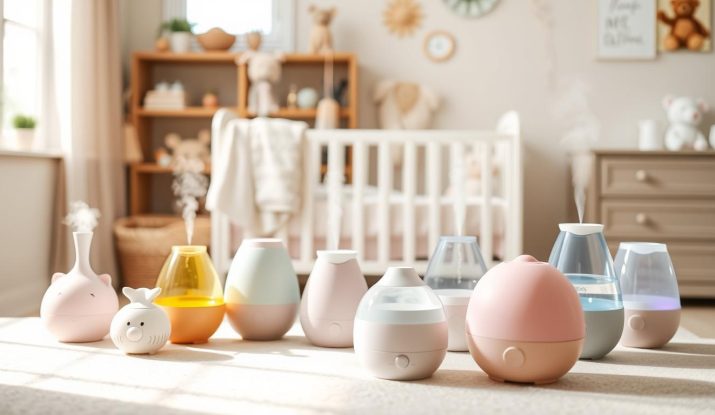
We know parents in Singapore often add a humidifier to a sleeping room to ease dry air and restless nights. Expect clear benefits, such as gentler breathing and less dry skin, but also trade-offs like routine cleaning and tank refills.
In this roundup we compare real-world performance, noise levels, cleaning effort and overnight run time. We test familiar brands such as Philips and Xiaomi alongside compact models that suit smaller flats.
Our guide focuses on what truly matters: safe mist output, steady humidity control and simple water systems that resist mould. We match different products to budgets and needs, from basic models to smart, app-controlled units.
Later we cover cool-mist safety, mould prevention, light and white-noise options, and how to pick a tank size for a full night. Use a humidifier as part of a routine — daily refills and weekly cleaning keep it helpful, not risky.
Why we recommend a nursery humidifier for babies in Singapore
Singapore homes often combine air-conditioning with long sleep periods, and that mix can leave indoor air surprisingly dry.
When a humidifier can help with dry air, stuffy noses and sleep
We find a humidifier baby device can ease a blocked nose and reduce skin itchiness during cooler nights. Dr Allen J. Dozor notes that dry indoor air can cause dry skin and congestion; adding controlled moisture can improve comfort when used safely.
Balancing moisture and mould risk in air-conditioned rooms
Ultrasonic models may produce condensation on nearby surfaces if overused. That encourages mould growth close to cots and soft furnishings, so we stress monitoring and regular cleaning.
“Monitor indoor humidity rather than rely on guesswork; both low and high levels carry risks.”
What “comfortable humidity levels” look like and why they matter
We aim for a steady humidity level between 40–60% as a practical target. Stable control matters more than chasing higher numbers.
- Use a hygrometer or humidistat to track humidity levels.
- Set manageable run times and clean tanks weekly to protect health.
- Place units carefully to avoid condensation on nearby surfaces.
Baby humidifiers for nursery: our top picks at a glance
We cut the clutter and list four clear winners to help you choose quickly. Each pick balances output, cleaning and quiet operation so you can match a unit to your room and routine.
Best overall — Levoit LV600HH
Why we like it: measured under 40 dB in independent testing and up to 36 hours run time. It offers warm and cool mist, a large tank and advanced controls. It’s pricier but excels in steady output and flexibility.
Best for hygiene and cleaning — Miro NR07G
Why we like it: fully washable parts, a magnetic assembly and a fill-in-place bowl that remove the typical “icky tank” problem. This option suits hands-on cleaning routines.
Best value — Crane Drop
Why we like it: quiet (
Best nursery aesthetic — Crane Adorable
Why we like it: an animal design and soothing sound profile (≈40.2 dB) that suits a decorated room. It includes optional filters but is slightly less effective in larger spaces.
- Quick takeaway: Levoit for all-round performance; Miro for hygiene; Crane Drop for budget; Crane Adorable for design-led rooms.
- Who it’s for: small rooms, hands-on parents, minimalists or feature-seekers — choose the option that fits your daily routine.
Read our full testing notes and detailed picks at best humidifier picks.
How we selected and evaluated these humidifiers
We tested a selection of compact and full-size units to see how they perform in real bedroom conditions. Our aim was to give parents clear, usable data on output, upkeep and bedside behaviour.
Testing focus: effectiveness, cleaning, noise and ease of use
Practical tests measured how well each unit raised humidity in a ~150 sq ft room over three hours, echoing BabyGearLab’s methodology. We also timed tank emptying to verify run time claims as Forbes did.
Ease of cleaning and simple controls mattered. A model that is fiddly to top up or scrub loses points in everyday use.
What “quiet” means in real terms
Noise was recorded with a meter 6 inches from the outlet on the highest setting. Sub-40 dB typically feels like a low hum and is unlikely to wake a sleeping child.
“Sound type counts as much as the dB number — steady white noise is easier to sleep through than rattle or motor clicks.”
Tank capacity and why max run time matters
Size and tank hours determine how often you refill at night. Larger tanks cut interruptions but take more side-table space.
We weigh tested numbers and real-life features, favouring models with transparent data over vague claims like “whisper-quiet” or “all-night” performance.
Safety first: cool mist guidance and nursery placement
Choosing the right mist type and position keeps air comfortable and safe. We follow clear guidance to reduce burn and mould risk while keeping a restful room environment.
Why the American Academy recommends cool mist
The American Academy of Pediatrics advises cool mist because warm steam can cause burns if a curious child touches the unit or if it tips over.
Ultrasonic cool mist models work well, but they can create larger droplets that settle on nearby surfaces and raise mould risk if not used carefully.
Placement rules to protect bedding and soft toys
Keep the unit out of reach and off the cot edge. Position it so mist does not soak bedding, curtains or plush items.
Place the device away from corners and walls to avoid trapped moisture and condensation build-up.
Avoiding over-humidifying and condensation
Watch for damp patches, wet window frames or a musty smell — these are condensation warning signs.
Use a humidistat or auto mode where possible. With basic units, pair one with a simple hygrometer to track levels and prevent spikes.
“Balance comfort with mould prevention; steady humidity is safer than high humidity.”
Practical notes for Singapore flats and paired devices
Small rooms in Singapore can reach target humidity quickly. Run on lower settings and direct mist away from fabrics.
If you also use an air purifier, space devices so the purifier does not draw in wet air directly from the mist outlet. This prevents wet zones and keeps both units effective.
| Risk | What to look for | Quick fix |
|---|---|---|
| Burns | Hot-steam units or close contact | Choose cool mist; keep out of reach |
| Condensation | Damp patches, wet windows, musty smell | Move unit from walls; lower output |
| Mould | Black spots on fabric or corners | Use humidistat; clean weekly; improve airflow |
Best overall baby humidifier for nursery: Levoit LV600HH
We rate the Levoit LV600HH as our top overall pick because it blends measurable performance with the everyday controls parents actually use.
Key features parents actually use
Humidistat, timer, remote and digital display reduce guesswork and make steady humidity easy to maintain. The remote and timer let us set night schedules without entering the room.
Performance highlights
The ultrasonic unit offers both cool and warm mist and runs up to 36 hours on low. Independent testing shows noise under 40 dB, so it sits quietly by the cot through the night.
Room coverage and tank handling
Rated to cover up to ~753 sq ft, the high capacity gives headroom in Singapore flats; that means we can run at lower settings in a small room to avoid over-humidifying. The 1.5-gallon tank has a handy handle and comes with a cleaning brush to simplify refills.
Trade-offs and who should buy it
Trade-offs include a higher price, larger footprint and more parts to clean than compact models. We recommend this unit to families who want rich features and flexible control. Those on a tight budget or who prefer minimal upkeep may choose a simpler option.
“Strong performance, sensible controls and long run time make the LV600HH our most usable pick.”
Smart hybrid pick for hands-off control: Levoit LV600S Smart Hybrid Ultrasonic Humidifier
We position the Levoit LV600S as the “set it and supervise less” option. The unit blends smart sensing with simple operation so we can target a steady humidity level overnight.
Why smart auto settings help prevent over-humidifying
The LV600S uses auto modes to monitor room humidity and adjust output. That reduces the chance of over-humidifying, which is useful with ultrasonic models.
Cleaning advantages: wider opening and fewer hard-to-reach corners
A wide tank mouth makes weekly cleaning more realistic. Fewer internal corners mean less residue and easier scrubbing.
What to know about app control, sleep mode and light management
VeSync app control adds useful features: set a target, schedule runs and get reminders. Sleep mode switches off LEDs so room darkness stays intact.
Note the trade-offs: account setup, Wi‑Fi dependency and the need to keep up with routine maintenance.
Water quality note: distilled water and the white dust issue
We recommend distilled water in Singapore households to reduce mineral aerosol. Using distilled water cuts down on visible white dust and keeps surfaces cleaner.
| Feature | Benefit | Practical note |
|---|---|---|
| Auto humidify | Steady humidity | Less manual adjustment overnight |
| Wider opening | Faster cleaning | Weekly scrubs are realistic |
| App & sleep mode | Remote control, LED off | Requires account and Wi‑Fi |
“Smart auto modes and a simple tank design make the LV600S our best pick when you want stability with minimal fuss.”
Most hygienic option for daily cleaning routines: Miro NR07G
When upkeep is the priority, a design that makes cleaning simple wins every time. The Miro NR07G targets families who treat routine maintenance as a health measure.
Fully washable parts and separated controls
All user-touch components on the NR07G are washable. Electronics sit apart from wet parts so we can clean without risking damage.
This reduces biofilm and improves long-term water quality, which matters for rooms used nightly.
Magnet assembly and quiet fill-in-place bowl
The magnetic assembly makes reassembly faster and less error-prone when we are tired. No cross-threading or fiddly seals.
The fill-in-place bowl lets us top up quietly with a jug, avoiding full tank flips during nap time.
Footprint guidance and who should buy it
The unit is bulky (10.5″W x 16″H x 10.5″L, ~4.69 lbs). Measure side-table depth and keep it away from bedding so condensation does not collect.
Who should choose it: parent‑led households that clean weekly and run devices often. It costs more but pays back in easier cleaning and better perceived quality.
“Anything that holds standing water can become a problem if it’s hard to access and scrub.”
| Feature | Why it matters | Practical note |
|---|---|---|
| Fully washable parts | Better cleaning access | Weekly scrubs are realistic |
| Separated electronics | Reduces damage risk | Safe to rinse components |
| Fill-in-place bowl | Quieter top-ups | Less disruption during naps |
| Size & weight | Stability on side tables | Check table depth before buying |
We also link a short guide to easy-to-clean models that complement this hygiene‑first choice.
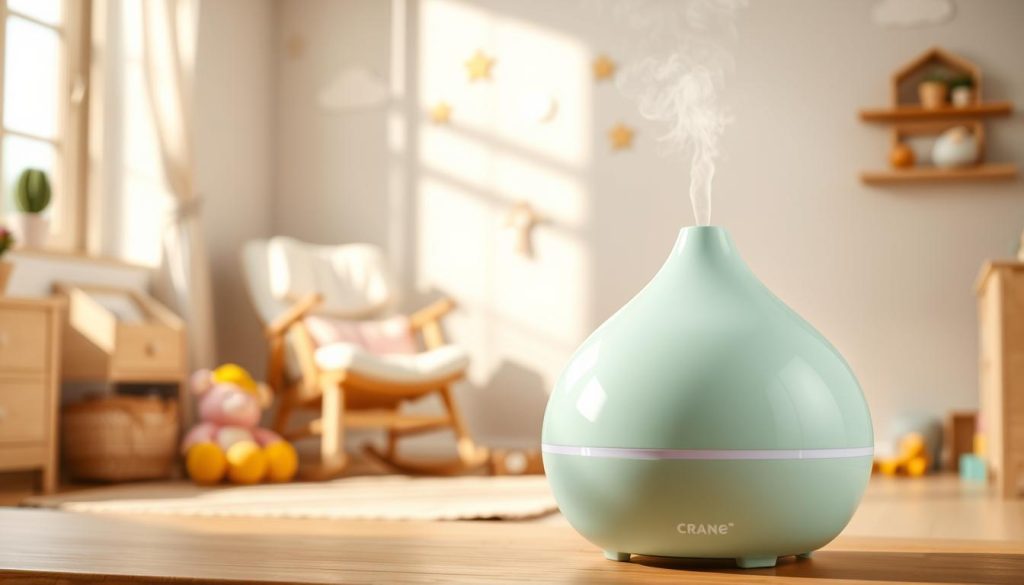
Best budget-friendly humidifier: Crane Drop
For owners who need dependable humidity and low noise on a budget, the Crane Drop hits the mark.
Why we like it
Quiet operation and strong moisture output make this an appealing budget option. The ultrasonic cool mist unit runs up to 24 hours from a 1‑gallon tank and covers about 500 sq ft.
Practical fit and controls
The compact design and simple dial suit smaller rooms and typical HDB bedrooms. Auto shut‑off gives extra peace of mind, and measured noise stays below 40 dB so the sound fades into the background.
Cleaning reality check & water notes
The reservoir has narrow, hard‑to‑reach areas that trap residue if we miss weekly maintenance. Using tap water can create white dust, though optional demineralisation filters reduce this.
Who should buy it
This is the right option for families on a budget who want a straightforward humidifier and will keep up with cleaning. It lacks a built‑in hygrometer, so we pair it with a basic hygrometer to track levels and meet our room’s needs.
| Feature | Benefit | Practical note |
|---|---|---|
| 1 gal tank | Up to 24 hrs run | Good for overnight use in small rooms |
| Ultrasonic cool mist | Strong humidity output | Watch surfaces for condensation |
| Measured | Quiet bedside profile | Suitable for light sleepers |
| Optional filters | Reduce mineral residue | Recommended if using tap water |
Cutest nursery-friendly design: Crane Adorable
A playful design can make a practical device feel like part of the room and raise the chances it stays in use. We find that models with animal themes are more likely to be kept on a side table and cleaned regularly.
Animal designs, soothing sound profile and bedtime suitability
The Crane Adorable uses animal styling to appeal to young kids while staying compact. Measured noise sits at about 40.2 dB, which many families describe as a steady, white-noise-like hum.
This profile suits typical sleep routines, though very light sleepers may still notice it on high settings.
Effectiveness expectations for typical room sizes
The unit is an ultrasonic cool-mist model with a 1‑gallon tank and claims up to 24 hours of run time. It is rated to cover roughly 500 sq ft, so it fits most Singapore bedrooms and small rooms well.
We note it is not as powerful as top performers in lab tests, so expect slower humidity rises in larger spaces.
Mist direction limitations and how to position it safely
Some Crane designs do not allow nozzle adjustment without rotating the whole unit. Point the outlet away from walls, bedding and soft toys to avoid damp patches.
Keep the device on a sturdy, raised surface and align the mist so it disperses into open air rather than onto nearby fabrics.
Practical buying tips
- Check nozzle behaviour — confirm whether your chosen animal shape changes mist direction.
- Optional filters can reduce mineral residue and white dust if you use tap water.
- Consider placement in your specific room to avoid condensation on window frames or curtains.
| Spec | Key detail | Practical note |
|---|---|---|
| Design | Animal-themed | Encourages consistent use and blends with décor |
| Coverage & run time | Up to 500 sq ft; ~24 hrs; 1 gal tank | Good for typical Singapore rooms; slower in large spaces |
| Mist & controls | Ultrasonic cool mist; limited nozzle angle | Position away from fabrics; rotate unit if needed |
| Noise & filters | ~40.2 dB; optional demineralisation filters | Soothing sound for most; filters reduce white dust |
Other nursery humidifiers worth considering from our sources
For households seeking specific features—dishwasher-safe parts, long run time or app control—these alternatives can fit the bill.
Canopy Nursery 2.0
Why it stands out: a dishwasher-safe tank, fitted filter and UV tech make cleaning simple and improve air quality. It also packs a night light and sound machine.
Trade-off: ongoing filter costs are an ongoing expense to budget for.
AquaOasis Cool Mist
This compact unit ran ~23.5 hours on high in tests and is very quiet. The small tank is efficient, but manuals may ask for cleaning every three days to avoid build-up.
Safety 1st Connected
App routines, night mode and a display lock suit smart homes. We caution that it produces powerful mist, so monitor humidity in small rooms to avoid over-saturating fabrics.
Honeywell evaporative options
Evaporative technology reduces white dust and uses filters plus UV. These models are dishwasher-safe but can be louder on high and need periodic filter replacement.
Vicks and small tanks
Smaller, filter-free designs like the Vicks mini often run ~12 hours. A short run time can be a deal-breaker if you need all-night coverage.
“Choose these options when cleaning convenience, smart control or filtration matters more than maximum runtime.”
| Model | Run time | Key note |
|---|---|---|
| Canopy 2.0 | ~20+ hrs | Dishwasher tank, filter/UV |
| AquaOasis | ~23.5 hrs | Compact, quiet; frequent cleaning |
| Vicks Mini | ~12 hrs | Short run time |
What to look for when buying a baby humidifier for a nursery
A useful purchase balances predictable output, simple upkeep and a noise profile that won’t disturb deep sleep.
Technology choices: ultrasonic vs evaporative
Ultrasonic models use vibrations to create mist. They raise humidity quickly but can leave larger droplets on nearby surfaces and may produce white dust if water has minerals.
Evaporative units use a fan and wick. They are slower but self‑regulating and less likely to deposit residue.
Tank size, run time and refill convenience
Choose a tank that fits your side‑table. A larger tank means fewer night refills and more consistent output over many hours.
Noise profile: white noise versus disruptive sounds
We prefer steady hums that serve as white noise. Avoid clicking fans or rattles — those break sleep.
Light management and sleep modes
Look for sleep mode and dimmable LEDs. A unit that lets you switch off lights keeps the room dark and undisturbed.
Controls, humidity management and water type
Humidistats, variable mist and timers help keep a steady humidity level rather than big swings. Use distilled or filtered water to cut mineral aerosol and reduce residue.
Ease of cleaning
Wide openings, included brushes and dishwasher‑safe parts reduce friction and make weekly scrubs realistic.
“Steady control and easy upkeep are the features that keep a device useful night after night.”
| Item | Why it matters | Practical tip |
|---|---|---|
| Technology | Impacts speed and residue | Choose evaporative if you worry about white dust |
| Tank size | Determines refill frequency | Pick a tank that runs through the night |
| Noise | Sleep disruption risk | Prefer steady white noise under 40 dB |
| Controls | Maintains stable humidity | Humidistat + timer = fewer spikes |
For a deeper look at benefits and safe use, see our guide on humidifier safety and role in sleep routines at are humidifiers good for babies.
Cleaning, descaling and mould prevention for safer nursery air
Stagnant water and warm, dark tanks create ideal conditions for bacteria and mould to multiply. We explain the simple steps that keep a unit hygienic and protect room air and family health.
Why standing water breeds nasties and why routine matters
When water sits in a tank, microbes form biofilm on surfaces. That film releases microbes into the mist and the room. BabyGearLab highlights ease of cleaning as critical — the easier the upkeep, the less risk over time.
Weekly basics and descaling
Our weekly process is short: empty leftover water, rinse parts with soap and warm water, then dry. Once a week we run a vinegar descaling to break mineral build-up that traps grime.
Manuals that ask for more frequent wipe-downs
Some guides call for wipe-downs every three days and a deeper monthly clean. If you run a unit nightly, set calendar reminders so the task becomes routine and not occasional.
Filter, UV care and replacement schedules
Evaporative units need filter replacement; UV modules may require service every ~3,000 hours. Budget for replacements so filters are not left dirty, which undermines the whole process.
| Issue | Action | Frequency |
|---|---|---|
| Surface biofilm | Soap wash + dry | Weekly |
| Mineral scale | Vinegar descaling | Weekly or monthly (as needed) |
| Filters/UV | Replace per manual | Per hours listed (~3,000 hrs) |
“The best unit is the one we can keep consistently clean.”
Practical tips: use distilled or filtered water to cut scale, avoid over-humidifying nearby fabrics, and check walls or curtains for damp patches. For further testing notes on ease of upkeep see our ease of cleaning tests.
Conclusion
Finally, a practical summary helps parents match a humidifier to room size, daily routines and hygiene needs.
Our top picks remain clear: Levoit LV600HH as the best overall, Miro NR07G for hygiene, Crane Drop for value and Crane Adorable for nursery styling. Choose the one that fits your side table, noise tolerance and cleaning habits.
Prioritise cool mist, steady humidity control and a routine you will keep. In small Singapore homes, lower output quickly — smaller spaces reach target levels fast and can show damp patches if you overdo moisture.
Quick checklist: no night‑time refills, dimmable or off LEDs, gentle white noise rather than disruptive sounds, and a tank size that lasts through one sleep cycle. Use distilled or filtered water to cut white dust and mineral build‑up, especially with ultrasonic models near children.
Aim for comfortable humidity levels rather than extremes. Adjust output by feel and what your hygrometer shows. With safe placement and regular cleaning, the right device supports comfort and balanced moisture in your home.
FAQ
What humidity level should we aim for in a nursery?
Why does the American Academy of Pediatrics recommend cool mist?
How close can we place a humidifier to the cot?
How often should we clean and descale the unit?
Do ultrasonic models create “white dust” and how can we prevent it?
How loud is “quiet” in real terms — will it disturb sleep?
What tank size and run time do we need for overnight use?
Is a smart humidifier worth it for preventing over‑humidifying?
Are evaporative and ultrasonic technologies different at night?
What water should we use in the tank?
How do we avoid mould and condensation on surfaces?
How do we choose a model that fits a Singapore flat or small room?
What maintenance costs should we consider?
Can a humidifier improve sleep by providing white noise?
Are there hygiene‑focused models worth the premium?

- Make a DIY Humidifier for Baby: Our Step-by-Step Guide - August 2, 2026
- Using Distilled Water for Baby Humidifier: Our Guide - August 2, 2026
- What is the Optimal Distance of Humidifier for Baby - July 31, 2026