
We set the scene for Singapore parents deciding between comfort and caution. This short guide explains the difference between warm mist and cool mist at a high level. It shows why the choice matters more in a baby room than in an adult bedroom.
We preview the main hazards: burns from hot water and steam, plus common risks that apply to any humidifier such as mould, bacteria and mineral dust. We stress practical nursery routines like overnight use and short naps in small rooms.
What you will learn: how to pick a safer device, where to place a humidifier, ideal humidity (30–50%), which water to use and how to clean the unit. Our bottom line is simple: in most baby households, cool mist is the safer default. If parents choose warm mist, they must take stricter precautions to prevent scalds and reduce aerosolised particles.
Why we use a humidifier in a baby room in the first place
Many parents add moisture to the nursery air to help their child breathe and rest better. We find that a measured rise in humidity can ease symptoms without creating new problems.
How dry air affects little ones
Low levels of dry air can irritate a baby’s throat and nasal passages. That often means more congestion and broken sleep when a child has a cold.
Indoor air-conditioning in Singapore can make dry skin worse. Babies have delicate skin and feel discomfort sooner than adults.
What a humidifier does
A humidifier turns water into fine moisture that fills the room. That added moisture can make breathing feel easier and reduce overnight coughing.
When using a humidifier helps most
We recommend using humidification during coughs, colds and seasonal bugs. It can cut night wakings, soothe feeding times and sometimes provide gentle white noise from the unit.
- Keep humidity around 30–50% to balance comfort with mould prevention.
- Maintain hygiene — a device supports comfort but is not a cure.
- Monitor use and time to avoid over-humidifying the room.
are warm mist humidifiers safe for babies?
We answer the question directly: the steam-style option can be used, but the primary concern is burns and scalds from hot steam or spills.
Realistic accident scenarios include a crawling baby tipping the unit, a carer knocking it during a night feed, or hot vapour drifting into the cot. In compact Singapore flats, furniture and the cot sit closer together, which raises this risk.
The germ-reduction upside
Boiling water kills many microbes inside the device. That means less chance of bacterial growth and no mineral white dust from aerosolised particles.
| Factor | Steam-style device | Implication |
|---|---|---|
| Microbe control | Boiling reduces germs | Lower internal contamination |
| Burn risk | High—hot water and steam | Greater chance of scald injuries |
| Dust from minerals | Low | Cleaner air particulates |
| Best use case | Large room, out of reach | Acceptable with strict placement |
Our safety takeaway
If there is any chance a baby can touch, pull or topple a humidifier, we would avoid this type entirely. We also advise choosing cool-mist units if siblings or pets share the room.
Warm mist vs cool mist: choosing the safest type for babies
Not all devices that add moisture work the same; the technology inside matters for risks and benefits.
Why cool mist units are usually recommended around children
Cool mist units deliver moisture without hot steam, which removes the main scald hazard. That makes them the common choice in smaller Singapore flats where items sit close together.
They still need cleaning; if neglected, live microbes can spread. Regular maintenance keeps humidity helpful rather than harmful.
Ultrasonic versus evaporative models
Ultrasonic humidifiers use vibrations to create a fine spray. They run quietly and use less power, but they can aerosolise minerals, bacteria and chemicals from water.
Evaporative humidifiers push air through a wick or filter. That traps many minerals and reduces airborne residue, at the cost of larger size and periodic filter changes.
“White dust” and tap water minerals
White dust is simply mineral particles from tap water that become airborne with some mist humidifiers. You can see residue on surfaces or breathe tiny particles.
Using distilled or filtered water cuts this problem. If you notice residue in your home, switch water type or consider an evaporative option.
| Feature | Ultrasonic | Evaporative | Implication |
|---|---|---|---|
| No hot steam | Yes | Yes | Lower burn risk |
| Mineral output | High (white dust possible) | Low (wick traps minerals) | Evaporative lowers particles |
| Maintenance | Regular cleaning | Cleaning + filter replacement | Both need care to prevent microbial growth |
| Best fit | Quiet, small rooms with filtered water | Homes with hard tap water or who want lower dust | Match unit to water and routine |
For practical guidance, see our humidifier guide which helps match technology to room size and care habits.
How to set up a baby humidifier safely in the room
We focus on practical steps that cut accident risks and keep the nursery air comfortable. Follow a simple setup routine and check it as your child grows.
Placement rules
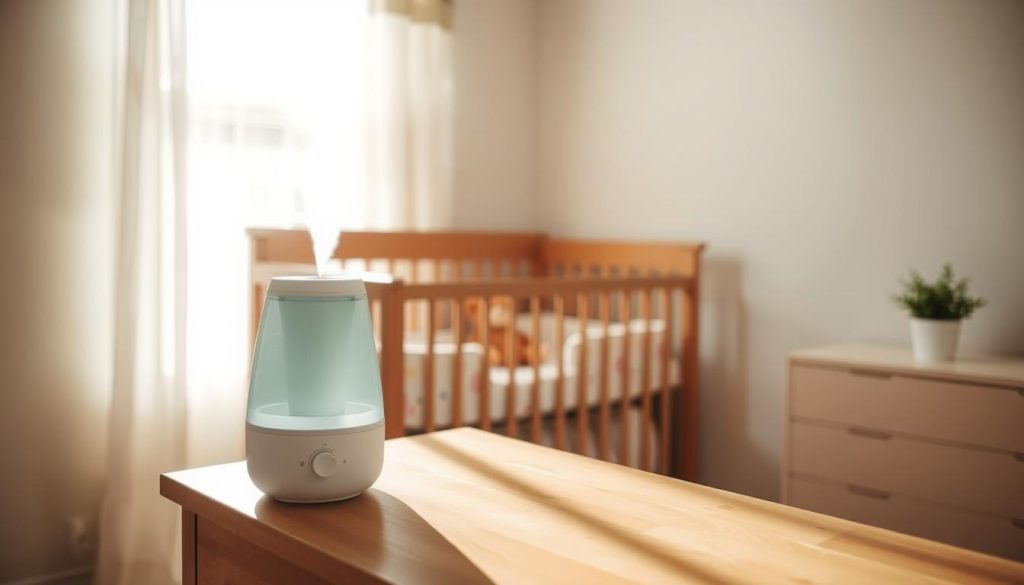
Place the humidifier on a flat, stable surface at least 2 feet above the floor. Keep the unit roughly 6 feet from the cot or bed to avoid direct mist on bedding.
Checklist: stable surface, raised position, buffer from the cot. Use a baby humidifier model that fits the room size and your routine.
Cords and reach
Route cables behind heavy furniture and remove slack so children cannot pull the device down. Secure plugs and avoid letting any cord hang within reach.
Airflow basics
Place the device where air circulates without blowing moisture onto walls or fabrics. Position it away from fans or AC vents that would create damp hotspots.
Re-check the setup after cleaning, after rearranging furniture, and as your child becomes mobile to keep baby protected and maintain correct humidity level and use.
Getting the humidity level right to reduce mould and bacteria risk
We aim for a balance: enough moisture to ease breathing but not so much that mould growth or bacteria multiply. In Singapore, closed rooms can climb into a mould-friendly zone quickly, so measured control matters.
Target ranges to aim for
Keep indoor humidity between 30–50%. This range aids comfort and cuts the chance of mould and bacteria taking hold on walls or fabrics.
How to monitor humidity
Use a hygrometer or a unit with a built-in humidistat to check the level. Place the sensor at baby height but away from direct steam, windows, or AC drafts for an accurate reading.
Signs you’re overdoing it
Watch for condensation on windows, damp patches on walls, wet linens or a musty smell. These signs point to rising mould growth and poorer air quality, so lower settings or stop the device.
How long to run it
Run the humidifier at night when symptoms peak and use short bursts in the day. Turn it off once the target level is reached and keep to regular cleaning to limit microbial risk. For guidance on safe operation, see safe humidifier use.
Water, essential oils and what we should never add to the tank
Water choice affects residue, airborne particles and how a humidifier performs in a nursery. We recommend a conservative approach that keeps the room air clear and reduces maintenance effort.
Distilled water vs tap water
Distilled water reduces mineral build-up inside the unit. That lowers white dust and the tiny particles that can spread through the room.
By contrast, tap water can leave deposits. Ultrasonic devices are most likely to release these particles into the air.
Why we avoid essential oils and aromatic additives
We must not add essential oils, disinfectants or vapour rubs to the tank. Fragrance compounds can irritate a young child’s airways.
If a product is not explicitly approved by the manufacturer for that model, it should stay out of the device. Speak to a clinician before using any aromatic additives, especially with babies under three months.
- Clear rule: plain, filtered or distilled water only.
- Cleaning link: cleaner water cuts residue and simplifies weekly care.
| Item | Effect in device | Nursery impact |
|---|---|---|
| Distilled water | Low mineral deposits | Less dust; easier cleaning |
| Tap water | Mineral build-up | Possible airborne particles |
| Essential oils / additives | Chemical residue | Irritation risk to baby |
Cleaning your humidifier: the step-by-step routine that keeps baby safe
Regular cleaning stops a humidifier from becoming a source of airborne germs in the nursery. We set out a short, repeatable routine that fits busy Singapore homes.
Daily habits to prevent bacterial growth
Empty the tank each day, rinse and wipe any film, then leave parts to dry fully. This prevents bacteria and fungi growth in standing water.
Weekly deep clean
Disassemble per the manual, scrub contact points and disinfect water-exposed parts. If the manufacturer allows, soak removable parts briefly in a 10% bleach solution, then rinse thoroughly.
Filters, wicks and consumables
Evaporative humidifiers need filter and wick changes on schedule. Replace them if smells, reduced output or visible residue appear.
Red flags and when to stop using the device
“Visible slime, musty odours or repeated white dust mean stop, clean and reassess water choice or the unit type.”
If you see mould spotting inside the tank, persistent odours, or recurring dust on surfaces, remove the unit from the room until it is deep-cleaned or replaced.
| Task | Frequency | Why it matters |
|---|---|---|
| Empty & dry tank | Daily | Prevents bacterial growth |
| Deep clean & disinfect | Weekly | Stops mould and biofilm |
| Replace filters/wicks | Per manufacturer | Maintains output and limits microbes |
Final habit: after every clean, re-check placement and cords before using humidifier again in the nursery.
Conclusion
Our final note sums the key actions that limit risk and keep nursery air comfortable.
For most Singapore homes we recommend a cool-mist baby humidifier as the default because it removes the burn hazard while still adding moisture to dry air. Aim to keep indoor humidity at 30–50% and watch for condensation or musty smells as signs to reduce output.
Use distilled or filtered water to cut mineral dust. Never add essential oils or other aromatic liquids to the tank. Place the unit out of reach and secure cords so a crawling child cannot pull it into the cot.
Keep a strict cleaning routine: empty and dry daily, deep clean weekly, and change filters on schedule. If a baby has persistent breathing issues, speak with a paediatrician before continuing use.
FAQ
Why do we use a humidifier in a baby room?
How does dry air affect babies?
What does a humidifier actually do?
When is using a humidifier most helpful for a baby?
What is the main risk with warm steam devices?
Can boiling water inside a device reduce germs?
When should we avoid warm steam units entirely?
Why are cool vapour models generally recommended around children?
What’s the difference between ultrasonic and evaporative units?
What is “white dust” and why does it matter?
When is an evaporative unit a better choice?
Where should we place a humidifier in a baby’s room?
How do we manage cords and reach hazards?
How should airflow be arranged to avoid damp spots?
What humidity range should we aim for to limit mould and bacteria?
How do we monitor humidity effectively?
What signs show we’ve over‑humidified the room?
How long should we run a device: daytime or overnight?
Should we use tap water or distilled water in the tank?
Can we add essential oils or aromatic additives to the tank?
What daily habits keep a device hygienic?
What does a weekly deep clean involve?
When should we replace filters and wicks?
What are the red flags that mean stop using the device?

- Make a DIY Humidifier for Baby: Our Step-by-Step Guide - August 2, 2026
- Using Distilled Water for Baby Humidifier: Our Guide - August 2, 2026
- What is the Optimal Distance of Humidifier for Baby - July 31, 2026