
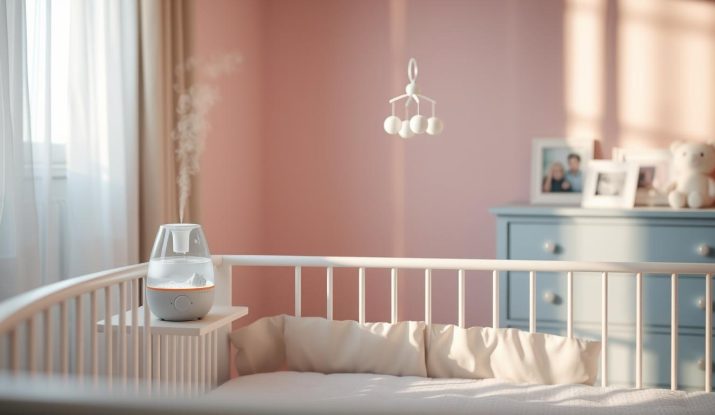
We set the scene: in Singapore many nurseries feel drier when the air-conditioning runs at night. This can leave the little one restless and affect sleep.
What safe use looks like is simple. We balance comfort and hygiene by aiming for about 30–50% humidity, favour cool mist models and keep the unit roughly 1–2 metres from the crib.
We prioritise hazards first: excess damp, mould, dirty tanks, cords within reach and hot steam are preventable. Our daily checklist covers correct distance, the right target, fresh water and routine cleaning.
Practical reassurance: when the device is set up sensibly and monitored with a hygrometer, it supports a healthier sleep environment. It is not a medical treatment, so we still watch symptoms and seek care if needed.
Why a humidifier can help our baby’s health and comfort in Singapore</h2>
Even in humid Singapore, prolonged air-con use can leave the nursery air uncomfortably dry at night. We see this often: closed windows, long cooling cycles and stale indoor air change the room environment and can affect how our little one breathes and sleeps.
How added moisture supports easier breathing during sleep
Gentle moisture helps keep nasal passages from feeling overly dry. This can reduce irritation in the nose and throat and may make breathing during sleep more comfortable.
Relief for dry skin and eczema-prone babies in air-conditioned rooms
Moisturised air can soothe sensitive skin and reduce flare-ups that come with dryness. Maintaining steady humidity is a practical part of a skin-care routine for infants with eczema-prone skin.
How balanced humidity may reduce cold and congestion symptoms
Balanced humidity may help thin mucus and ease mild congestion symptoms when colds occur. We avoid overpromising but note that a measured rise in moisture can bring relief without turning the nursery damp.
What we observe over several nights: improved sleep patterns, fewer nasal clicks, and less restless rubbing of the face. If those signs do not improve, we seek clinical advice.
- Practical note: on closed-window days (heavy rain or haze) indoor air can feel stale, so we keep the device clean and aim for recommended humidity targets.
- For product guidance, see our curated picks on best nursery models and options for respiratory needs at allergy-aware selections.
Choosing the right humidifier for baby room air</h2>
We choose practical safety over gadget appeal. When we pick a unit, we prioritise models that reduce burn risk and are easy to clean. This keeps the nursery safe and low maintenance in Singapore’s smaller rooms.
Cool mist vs warm mist: why cool mist is generally safer
Cool mist avoids the scald risk of hot steam, so it is our usual recommendation near a cot or play area. Warm mist can feel soothing, but it brings higher burn potential and may tempt curious hands.
Warm models may appeal when parents like the idea of “soothing steam”, yet we generally avoid them in active nurseries. Safety and cleanability come first.
Ultrasonic models: quiet operation for a calmer night’s sleep
Ultrasonic units run quietly and support calmer sleep by reducing sound disruption. However, quiet does not replace correct placement.
We make sure the mist does not saturate bedding and that the device sits on a stable surface out of reach of a crawling child.
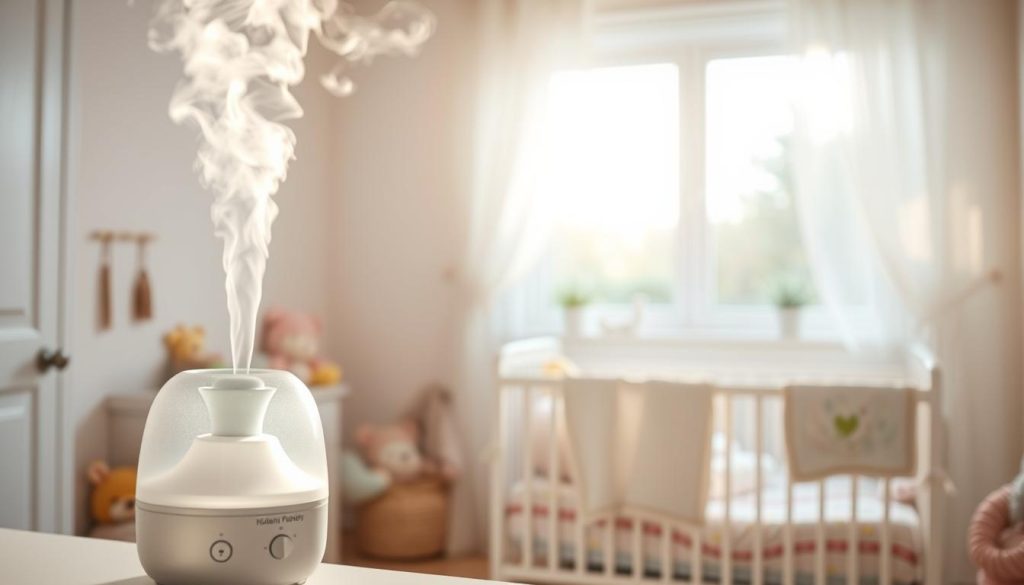
Helpful features to look for
- Automatic shut-off when the tank is empty to prevent dry-running.
- Built-in sensors or a humidistat to stop over-humidifying and protect the air quality.
- Adjustable mist output and a compact footprint suited to smaller rooms.
- Easy-to-clean parts and a stable base to reduce mould and tipping risk.
“Prioritise safety and cleanability first, then convenience features.”
Using humidifier for baby without over-humidifying the room</h2>
Keeping indoor moisture steady is one of the simplest ways we help our little one sleep more comfortably. We aim to keep humidity levels in the nursery at roughly 30–50%, a range often cited by paediatric guidance to balance comfort and health.
Target levels and why they matter
Over-humidifying means humidity that regularly sits above the recommended range and causes condensation on windows or damp fabrics. That excess moisture encourages mould, which harms the room environment and child health.
Measure and adjust with a hygrometer
We place a simple hygrometer away from direct mist and bedding. Readings guide us to lower or raise the mist output rather than leaving the unit on full power.
Practical night routine and signs to watch
Set a moderate mist level, check humidity after 30–60 minutes and fine-tune to keep steady levels overnight.
- Too dry: dry lips, flaky skin, irritated nose or a scratchy cough.
- Too damp: window condensation, clammy bedding, a musty odour or damp patches near the unit.
Correct humidity supports comfort and may bring relief for mild congestion, but persistent symptoms or breathing difficulty needs medical advice.
For product guidance and care tips on humidifier with newborn choices, we recommend checking trusted reviews and following routine monitoring.
Where we place a humidifier in the nursery to reduce risk</h2>
Placement changes outcomes. A well-chosen spot keeps mist from settling on bedding and reduces mould growth in the room. We place the unit so moist air disperses, not so it puddles on soft surfaces.
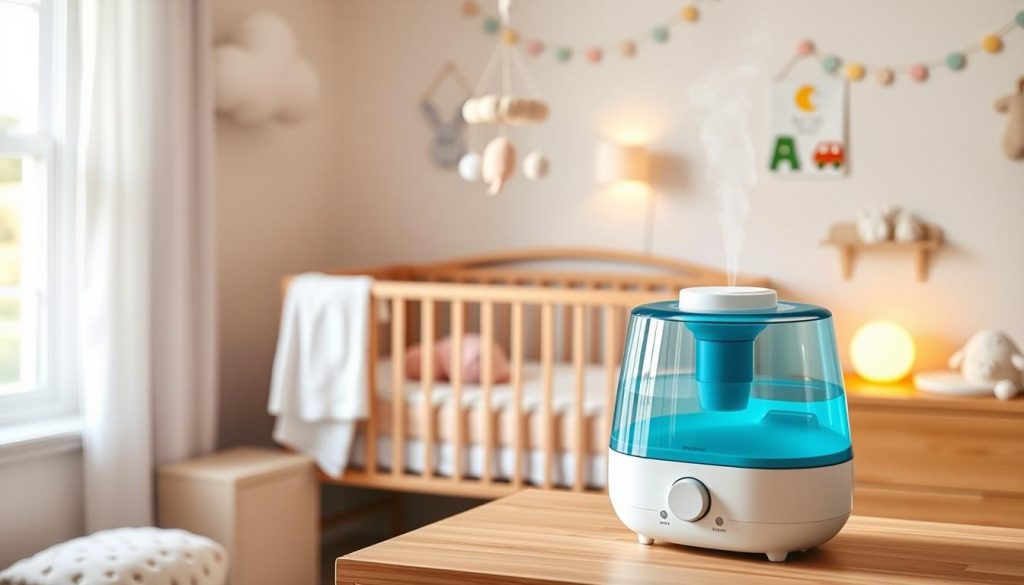
Safe distance from the crib to avoid damp bedding and saturated sleep space
Rule we follow: keep the humidifier roughly 1–2 metres (3–6 feet) from the crib. Too close and mist can damp sheets, cushions and mattresses — a direct route to mould and ruined padding.
Choosing a flat, stable surface and keeping cords out of reach
We place the device on a sturdy dresser or side table to avoid tipping and leaks. Cords go behind furniture and plugs are secured so a curious child cannot pull the unit down.
Leaving space around the device and away from walls to prevent mould growth
Leave at least one foot clearance from walls and avoid under-shelf spots. Each morning we do a quick room scan: check curtains, walls and wooden surfaces for dampness and adjust placement or mist level as needed.
“Safe placement matters as much as the model — most problems begin with the immediate environment around the unit.”
Cleaning and maintenance to prevent mould, bacteria and white dust</h2>
Simple hygiene habits keep the room fresher and prevent microbial growth in the unit. Regular cleaning is non-negotiable: a dirty tank can spread contaminants into the air we breathe.
Daily habits: each morning we empty any remaining water, rinse the tank and wipe wet surfaces. Then we refill with fresh water before the next use. This short routine cuts bacterial and mold growth risk.
Deep clean schedule and practical method
About every three days, or per the manufacturer’s guidance, we do a deep clean. A 1:1 mix of water and white vinegar loosens scale and residue safely. Rinse thoroughly afterwards.
Where mould starts and how we inspect
Mould often hides in seams, lids and hard-to-see corners. We check these spots under bright light and scrub any build-up promptly.
Filters, storage and outcomes
Replace filters, wicks or cartridges as the maker specifies; delayed swaps reduce performance and raise contaminant levels. If the unit will sit unused for months, dry all parts fully before storing.
Consistent cleaning supports steadier humidity, fewer musty smells and a cleaner room environment.
Extra safety considerations for babies and young children</h2>
Small changes in placement and habit cut most risks around little ones.
Warm mist models create hot water and steam. If tipped or touched they can scald quickly. We avoid warm steam near cots and play areas, and prefer quieter, cooler options when children can reach the unit.
Why warm steam can pose burn risks
Hot liquid and steam cause immediate burns if a child knocks a unit over. Mobility advances fast — rolling, crawling and pulling up happen within weeks.
We plan placement with that in mind and keep any device well out of reach.
Essential oils: cautions and paediatric checks
Oils are not required to improve air comfort and can irritate newborn airways. Many guidelines advise avoiding oils in the first three months.
We check with our paediatrician before introducing any fragrance and follow a strict “less is more” rule if allowed. Stop at the first sign of irritation.
- Practical defaults: choose cool-mist models and keep units inaccessible to children.
- Minimal oil use only after professional sign-off.
- Red flags: wheeze, worsening cough, persistent irritation or disturbed sleep — stop and seek advice.
| Concern | Warm mist / steam | Cool option & oils |
|---|---|---|
| Burn risk | High if tipped or touched | Low; still keep out of reach |
| Respiratory irritation | Steam safe but hot; oils may irritate | Better choice; avoid oils early on |
| Recommended action | Keep away from cot; stable surface | Prefer cool; consult paediatrician before oils |
For more detail on benefits and safe practice, see our review on are humidifiers good for babies?
Conclusion</h2>
, A measured approach lets us gain the benefits of added moisture while avoiding new risks in the nursery.
We aim for roughly 30–50% humidity and check with a hygrometer. Keep the unit about 1–2 metres (3–6 feet) from the crib and at least one foot from walls to prevent damp and mould.
Choose cool mist models where possible and set a steady mist output. Empty and rinse the tank daily and deep clean on a regular schedule; replace parts per the maker’s guidance.
Watch outcomes: better sleep, less dry skin and eased congestion are useful signs. If symptoms persist or you consider essential oils, consult a paediatrician.
When we follow these simple steps — measure, place, clean — the humidifier supports comfort and health in the baby room without creating new issues.
FAQ
What benefits does a humidifier bring to our little one’s breathing and sleep?
Can added moisture help a baby with dry skin or eczema in air-conditioned rooms?
Does balanced humidity reduce the risk or severity of colds and congestion?
Should we choose cool mist or warm mist for the nursery?
Are ultrasonic humidifiers a good option for a calmer night’s sleep?
Which features should we look for when buying a nursery unit?
What target humidity range should we maintain in the baby’s room?
How do we measure and adjust room humidity accurately?
What signs show the air is too dry or too damp for our child?
Where is the safest place to position the unit in the nursery?
How do we avoid wetting the cot or creating a saturated sleep space?
What daily habits help prevent mould, bacteria and white dust?
How often should we perform deep cleaning to stop mould growth inside the tank?
When should filters or parts be replaced to keep the air clean?
Why is warm vapour riskier around young children?
Are essential oils safe to use with a nursery humidifier?

- Best Air Humidifier for Baby Room: Our Buying Guide - August 3, 2026
- Air Humidifier for Babies: A Comprehensive Buying Guide - August 3, 2026
- Understanding Air Humidifier Benefits for Baby: A How-To - August 1, 2026