

We aim to reduce risk through evidence-based feeding, not to promise foolproof results for every child. Our guide explains practical steps for building tolerance safely and calmly.
Why this matters in Singapore: a peanut allergy can change everyday food choices, childcare routines and confidence when eating out. We address those real-life impacts and how to manage them.
We will preview the early introduction approach and link to key research on early introduction evidence. That work showed benefits when infants received regular, age-appropriate peanut exposure.
We outline who this guide is for — most babies starting solids and families with higher risk such as eczema — and when to see a clinician. We stress that choking and allergy are different risks, and that safe forms of peanut plus consistent routines help manage both.
What follows: the science, risk groups and timing, safe home methods, and clear signs to watch for after feeds.
Why early peanut introduction works for allergy prevention
Early exposure trains a young immune system to accept common foods rather than attack them. Small, regular servings act like lessons. Over time the immune system learns tolerance instead of reacting.
Three long‑running studies show this clearly. The LEAP trial found that regular consumption of peanut products from infancy to age five cut peanut allergy at age five by 81%.
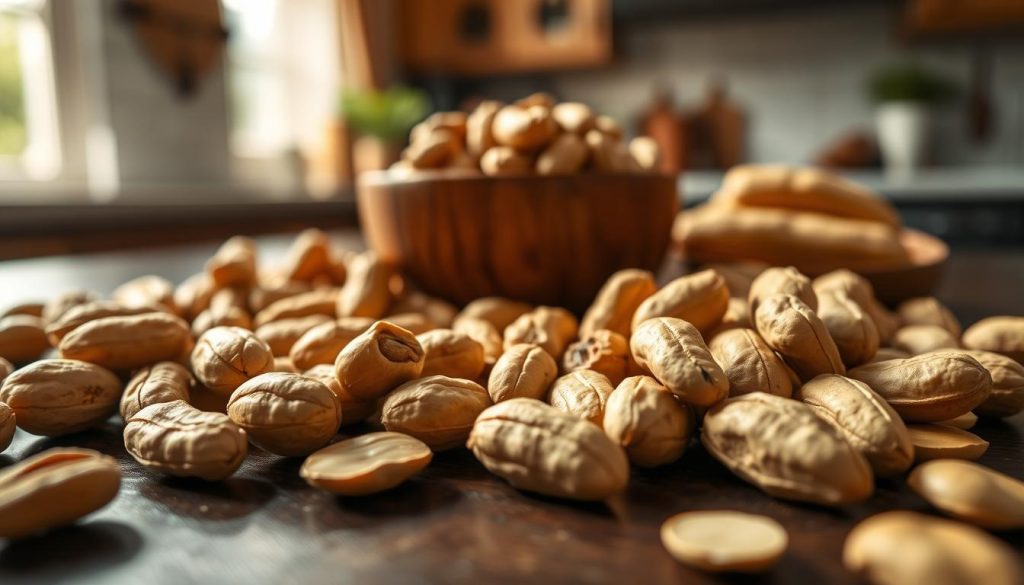
What the LEAP, LEAP‑On and LEAP‑Trio studies show
LEAP‑On reassured families: children who ate peanut early stayed largely protected even after a year of avoidance.
LEAP‑Trio (2024) followed children into adolescence. It reported 15.4% versus 4.4% rates, a 71% relative reduction for the early‑consumption group. The National Institute of Allergy and Infectious Diseases (NIAID) summarised that regular infant feeding to age five can give lasting protection.
What “early and often” means in practice
Early and often means offering small, baby‑safe peanut foods at the start of solids and including them regularly in meals. Per the studies, perfect consistency is not required; protection persisted even with variation later on.
| Study | Key result | Practical takeaway |
|---|---|---|
| LEAP | 81% reduction at age 5 | Introduce and offer peanut products regularly during early years |
| LEAP‑On | Protection maintained after 1 year of avoidance | Early tolerance can last despite short breaks |
| LEAP‑Trio (2024) | 71% reduction into adolescence | Early exposure gives long‑term benefit for many children |
Who is at higher risk of peanut allergy and when we should seek medical advice
Some infants carry higher risk factors that change how and when we introduce allergenic foods.
Which infants are higher risk? Those with severe eczema or an existing egg allergy face a greater chance of later developing a peanut allergy. Severe eczema affects skin barrier function and may raise immune sensitivity to foods.

How we decide whether to see a clinician
For higher-risk infants we recommend speaking with a GP or paediatrician before any first feed with peanut-containing food. A clinician may take a history, suggest testing or arrange a supervised first feed.
Timing: 4–6 months versus around 6 months
Guidance often recommends offering baby-friendly peanut foods from about 4–6 months for higher-risk infants under clinical advice. For many others, introducing peanut can wait until typical solids readiness around 6 months.
| Situation | Suggested action | Why |
|---|---|---|
| Severe eczema or egg allergy | Contact clinician before first feed | May need testing or supervised introduction |
| Mild or no eczema | Introduce at solids readiness (~6 months) | Home introduction is usually safe |
| Older infant with no prior peanut exposure | Discuss with clinician if anxious | Plan reduces worry and clarifies next steps |
Practical note: readiness for solids matters at any age. We do not rush feeds until the infant can handle purées and soft textures.
How we introduce peanut safely at home in Singapore
At home, a careful, staged approach makes the first taste of peanut safe and straightforward for most families.
Readiness for solids: we check that the baby can sit with support, has good head control and can swallow purées or soft textures. We pick a daytime feed and avoid offering a new allergen right before naps.
Starter forms and texture tips
Safest starters are smooth peanut butter thinned with water, breast milk or formula until runny, or peanut flour blended into porridge or purées. We offer tiny tastes on a spoon rather than a thick blob.
Portions, ramp-up and regular exposure
Begin with about ¼ teaspoon of thinned spread. Wait two hours while we observe for any reaction, then increase gradually over a few feeds if all is well.
“Once tolerated, include peanut in the diet regularly—many guidelines aim for about three times per week.”
| Step | Practical action | Why |
|---|---|---|
| First taste | ~¼ tsp thinned on a spoon, daytime | Small amount reduces risk and makes observation simple |
| Ramp-up | Increase across several feeds to a small serving | Builds tolerance and checks for delayed symptoms |
| Maintenance | Include in diet 2–3 times weekly | Regular exposure supports lasting tolerance |
Choking safety and serving ideas
We never offer whole nuts, nut pieces or thick sticky blobs. Keep the child upright and supervised.
- Mix powder into congee, oats or yoghurt for familiar textures.
- Use thinned spread in mild sauces or mashed fruit.
- Offer dissolvable puffs only once self-feeding is established and the snacks are fresh.
For more practical guidance and local resources for parents, see our detailed tips at preventing baby allergies: essential tips.
What we watch for after peanut introduction and how we respond to a reaction
Our immediate focus after offering a new food is a calm, two‑hour observation window for any signs of a reaction. Symptoms usually start within minutes but can appear up to two hours after eating peanut products.
Timing and common early signs
We watch for new skin redness, a local rash or a few hives around the mouth. These mild symptoms can appear first and should be noted.
Mild versus concerning signs
Mild: small, localised hives or a single episode of vomiting. We monitor closely and stop feeding.
Severe: facial swelling, widespread hives, repeated vomiting, persistent cough, wheeze, breathlessness, pale or blue colour, or sudden limpness. Any of these suggest a serious allergic reaction and need urgent care.
Immediate actions and when to seek help
If mild, keep the child upright, observe and record timing of symptoms. If breathing changes or severe signs appear, call emergency services or go to A&E in Singapore.
Prepare details for the clinician: child’s age, amount and form (thinned spread, powder or puff), exact timing, and photos of the skin change. After a reaction we avoid further peanut until a medical review and discuss testing or supervised re‑introduction.
“Most infants do not react, but being ready helps parents stay calm and act fast if symptoms occur.”
Conclusion
To finish, we pull together practical steps and the key evidence so families feel ready for a safe first feed at home. ,
Core approach: offer age‑appropriate, small amounts early and include them regularly to support lasting tolerance. The LEAP‑Trio data showed a 71% relative reduction by adolescence for those who had early, regular exposure.
At home in Singapore, confirm solids readiness, use safe forms (thinned spread or powder), start small and ramp up, then keep the food in the weekly routine once tolerated.
Higher‑risk infants with severe eczema or an egg allergy should see a clinician first. Never give whole nuts, firm pieces or thick sticky spreads — choking safety is essential.
Next step: pick a calm daytime meal, follow our preparation tips, and know the symptoms and when to seek urgent care.
FAQ
How can we reduce the risk of peanut allergy effectively in our child?
Why does introducing peanut early help prevent an allergic reaction later?
What did the LEAP, LEAP-On and LEAP-Trio studies find about reducing peanut allergy risk?
Is there long-term protection into adolescence from early introduction?
What does “early and often” mean in practice for building tolerance?
Who should seek medical advice before we introduce peanut to our infant?
How do severe eczema and egg allergy change the risk profile?
When is the right window to introduce peanut: around four to six months or closer to six months?
How can we safely introduce peanut at home in Singapore?
What are the safest forms to start with for an infant?
Can we use peanut flour or powder in baby foods without changing texture too much?
What portion sizes and ramp-up schedule should we follow?
How often should we keep peanut in the diet once our child tolerates it?
How do we prevent choking when offering peanut?
What are suitable age‑appropriate serving ideas?
When can peanut puffs or dissolvable snacks be an option and what should we watch for?
What timing of symptoms should we watch for after an introduction?
What are mild versus severe signs of a reaction?
When should we seek urgent medical help and what details should we share?

- Make a DIY Humidifier for Baby: Our Step-by-Step Guide - August 2, 2026
- Using Distilled Water for Baby Humidifier: Our Guide - August 2, 2026
- What is the Optimal Distance of Humidifier for Baby - July 31, 2026