
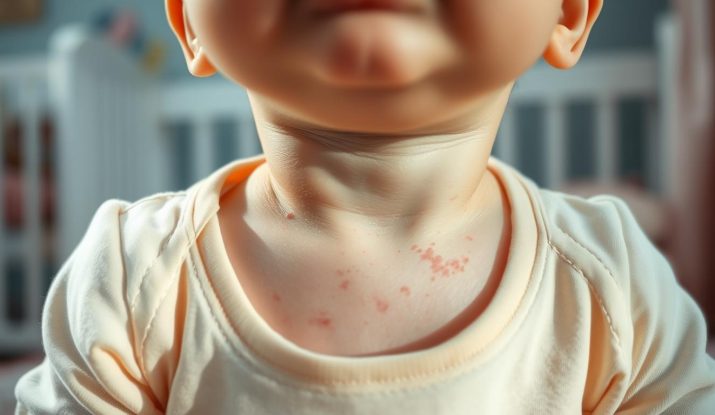
We understand how stressful a sore patch in the neck folds can feel. This guide explains why the problem is common in infants and what daily steps help reduce itch and redness. We will focus on simple, consistent care to strengthen the skin barrier and ease discomfort.
We set clear expectations: this is a chronic, relapsing condition, but regular routines cut flares and improve comfort over time. We outline how to spot symptoms, find triggers, build a gentle daily routine, manage flare-ups and know when to seek medical help in Singapore.
Our aim is practical and neck-specific. We cover gentle cleansing of creases, smart bib and clothing choices, and safe use of creams when needed. For more on treatment options and local advice, see our detailed guide here.
Understanding baby eczema and why the neck is a common problem area
Understanding the skin’s role helps us see why irritation appears in creases and folds.
What happens to the skin barrier
Atopic dermatitis and other forms of dermatitis are inflammatory conditions that reduce the skin’s ability to hold moisture and keep out microbes.
The barrier normally stops fluid loss, helps control body temperature and resists infection. When it fails, skin becomes dry, itchy and easily irritated.
Why folds flare easily
Folds trap saliva, milk and sweat. Friction from movement and clothing then worsens irritation.
In Singapore’s humidity and heat this dampness increases the risk of breakdown and repeated flare-ups.
How to tell apart common rashes
Heat rash shows tiny red bumps that settle when the child is cooled. Contact dermatitis tends to appear exactly where an irritant touched the skin, such as wet‑wipe residue or detergent.
We often see early signs on the face and scalp in infants before fold areas become affected.
| Condition | Typical signs | Common triggers |
|---|---|---|
| Atopic dermatitis | Dry, itchy, red patches; relapsing | Genetic factors, dry skin, heat |
| Heat rash | Small red bumps in creases | Overheating, sweating |
| Contact dermatitis | Red, well‑defined area where contact occurred | Wipes, detergents, lotions, saliva |
How to recognise eczema on babys neck and track symptoms over time
Quick recognition of small changes in the skin lets us start care sooner and limit flares. Below we list what to watch for and a simple way to track progress.
Typical warning signs
We note persistent redness in creases, a dry, rough texture and fussiness or rubbing that suggests itch.
Scaly patches often come and go. During a flare the area may look wet or ooze fluid, especially in younger infants.
When skin becomes weepy, crusted or thickened
Weeping or yellow crusting can indicate infection and needs prompt review.
Over weeks of rubbing the skin may thicken and show deeper lines (lichenification). Repeated friction speeds this change.
Keeping a simple flare diary
Note the timing of each flare, any new products used, the weather or heat exposure, and recent food introductions.
We recommend consistent photos in the same light and distance so we can compare patches week to week and share them with our doctor if needed.
- Why this helps: symptom tracking separates short-lived irritation from true inflammatory flares and guides targeted care.
Common triggers in babies and children, and how we reduce them at home
Many everyday factors around the home can combine to provoke a flare. We focus on simple changes that lower risk and keep skin calm.
Dry skin and over-washing
Soap-free, fragrance-free cleansers protect natural oils. Avoid antiseptics and harsh soaps that strip the barrier.
Short, lukewarm washes and immediate moisturising help prevent dry skin from becoming a persistent trigger.
Heat, sweat and the local environment
Singapore’s heat makes perspiration a frequent problem. Light cotton clothing and quick drying of folds reduce rubbing and trapped moisture.
We also watch air-conditioning: it can lower humidity and dry skin, so balance cool rooms with emollient use.
Irritants, friction and household allergens
Detergents, fabric softeners, wet‑wipe residue and scratchy fabrics are common irritants. Swap fragranced products and use gentle laundry routines.
To lower allergen load, wash bedding hot every two weeks, limit heavy curtains and consider reducing stuffed toys to cut dust-mite and pet dander exposure.
Food, family history and when to seek testing
Certain foods may matter for some children, but we avoid broad elimination without medical advice. A family history of hay fever or asthma raises the likelihood of allergic triggers.
“If food allergy is suspected, ask your clinician about structured testing rather than guessing.”
Our step-by-step daily care routine for a calmer neck
A simple, repeatable routine helps us keep the delicate skin in creases calm every day. This routine focuses on managing dryness and reducing friction so treatments work better.
The “soak and seal” approach
Keep baths short — about 10 minutes — with lukewarm water and a mild, non-soap cleanser. We avoid hot water that strips natural oils.
After a quick pat dry, apply a generous moisturiser immediately while the skin is still slightly damp to lock in moisture.

Moisturising and crease care
We moisturise the whole body at least twice daily, often 3–4 times in hot weather, and include normal-looking areas to prevent spread.
After feeds or drooling, clean creases gently with a soft cloth, dry carefully and reapply cream to reduce damp irritation.
Clothing, bibs and sleep
Choose breathable cotton, change wet bibs promptly and avoid rough seams that cause rubbing. In humid heat, change layers after sweating.
Keep nails short and consider soft mittens if needed. Moisturise before sleep and keep rooms comfortably cool to break the itch-scratch cycle.
“Consistent daily care reduces flare frequency and helps other treatments work better.”
Treatments that help during flare-ups: creams, medicines and specialist options
Acute flares need a stepwise approach so we can calm inflammation and protect fragile skin.
Emollients and barrier products
First, reinforce the skin barrier. Apply fragrance-free moisturisers generously and often. Petroleum jelly works well as an occlusive layer to lock in moisture.
Topical anti-inflammatory creams
When redness and itch are clear, doctors may prescribe short courses of topical steroid creams. Used properly, these reduce inflammation fast.
Important: under-use can prolong flares; over-use can thin delicate skin. Follow medical instructions and review if frequent courses are needed.
Prescription non-steroid options
For sensitive areas or repeated flares, clinicians sometimes use calcineurin inhibitors or PDE4 inhibitors as steroid-sparing alternatives.
Wet wrap therapy and oral medicines
Wet wrap therapy, done with clinician guidance, soothes severe patches and boosts moisturiser absorption.
Oral antihistamines or systemic medicines may be considered when itch disrupts sleep or the condition is widespread. These are used under specialist supervision.
If infection is suspected, treatment may change. Antimicrobials can be needed; do not escalate topical steroids alone without reassessment.
- Our flare-up plan: emollients first, then add anti-inflammatory treatment if required.
- Bring photos, your diary and a list of products to appointments to help clinicians tailor care.
| Treatment | Use | When used | Notes for parents |
|---|---|---|---|
| Emollients / petroleum jelly | Repair barrier, reduce dryness | Daily and during flares | Apply often; safe for creases |
| Topical steroid creams | Reduce inflammation quickly | Short, supervised courses | Follow dosing to avoid thinning |
| Calcineurin / PDE4 inhibitors | Steroid-sparing anti-inflammatory | Recurrent or sensitive-area flares | Prescription-only; monitor response |
| Wet wraps / oral meds | Soothe severe patches; control itch | Specialist-supported for severe disease | Used temporarily; clinical oversight required |
For non-steroid topical options, see a reliable local resource such as non-steroid cream guidance. For natural adjuncts and stepwise home care, read our practical guide here.
Preventing infection and knowing when to see a doctor in Singapore
In Singapore’s warm, humid climate we prioritise early steps to stop a minor rash becoming infected.
Key warning signs we watch for include yellow crusting, small pus-filled bumps, rapidly worsening redness, pain or fever. These signs suggest an infection and need prompt medical review because bacteria can spread quickly in moist creases.
How an infected rash differs: simple flares are dry and itchy; infected rashes often ooze, form crusts or cause systemic symptoms such as fever. Scratching raises the risk by breaking the skin barrier.

Practical prevention steps
- Keep nails short and clean to limit skin breaks.
- Moisturise consistently to strengthen the barrier and reduce cracking.
- Manage drool and wet clothing promptly to avoid maceration.
Antiseptic washes, bleach-bath and swimming pools
Doctors may suggest antiseptic washes during recurrent colonisation or obvious infection to lower bacterial load.
Bleach baths are done at very dilute concentrations similar to pool chlorine and must follow clinician instructions precisely. Never attempt concentrated mixtures at home.
Chlorinated pools can reduce surface bacteria, but we rinse off after swimming and apply moisturiser immediately to prevent post-swim dryness.
Preparing for an appointment
When we see a doctor, bring a clear timeline of symptoms, photos showing progression, a list of products used, and names/strengths of any topical treatments.
Early review supports good health. In warm, humid cases a prompt appointment can prevent worsening, shorten treatment time and protect a child’s comfort and recovery.
Conclusion
Timely care, simple routines and tailored treatment help most infants keep skin comfortable and healthy.
Protecting and rebuilding the skin barrier daily is the core strategy. We emphasise the “soak and seal” approach, frequent moisturising and careful drying of creases as non-negotiables.
Reduce known triggers at home, watch for worrying symptoms, and avoid broad food restrictions unless a clinician advises otherwise.
When inflammation needs more than emollients, supervised creams and other treatment options are effective and safe if used as directed.
For clinicians’ advice and practical protocols, see this healthcare professionals’ guide.
With steady routines and prompt medical review, we can usually reduce flares, ease discomfort and support healthier skin for babies living in Singapore’s climate.
FAQ
What is atopic dermatitis and how does it affect my baby’s skin?
Why does the neck often flare compared with other areas?
How can we tell the difference between atopic dermatitis, heat rash and contact dermatitis?
What are the typical signs we should track over time?
When do we need a doctor because of infection?
How should we change bathing and moisturising to reduce flares?
Which products and fabrics should we avoid around the neck?
Could food be causing or worsening the problem?
What topical treatments help during flares and how do we use steroids safely?
Are there prescription non‑steroid options if we want alternatives to steroids?
When is wet wrap therapy appropriate?
Should we give antihistamines to stop itching at night?
How can we prepare for a clinic appointment in Singapore?
What home measures reduce infection risk and are pools safe?
How do environmental factors like heat, air‑conditioning and humidity affect the condition?
When should we refer to a specialist?

- Make a DIY Humidifier for Baby: Our Step-by-Step Guide - August 2, 2026
- Using Distilled Water for Baby Humidifier: Our Guide - August 2, 2026
- What is the Optimal Distance of Humidifier for Baby - July 31, 2026